
What is a stress electrocardiogram?
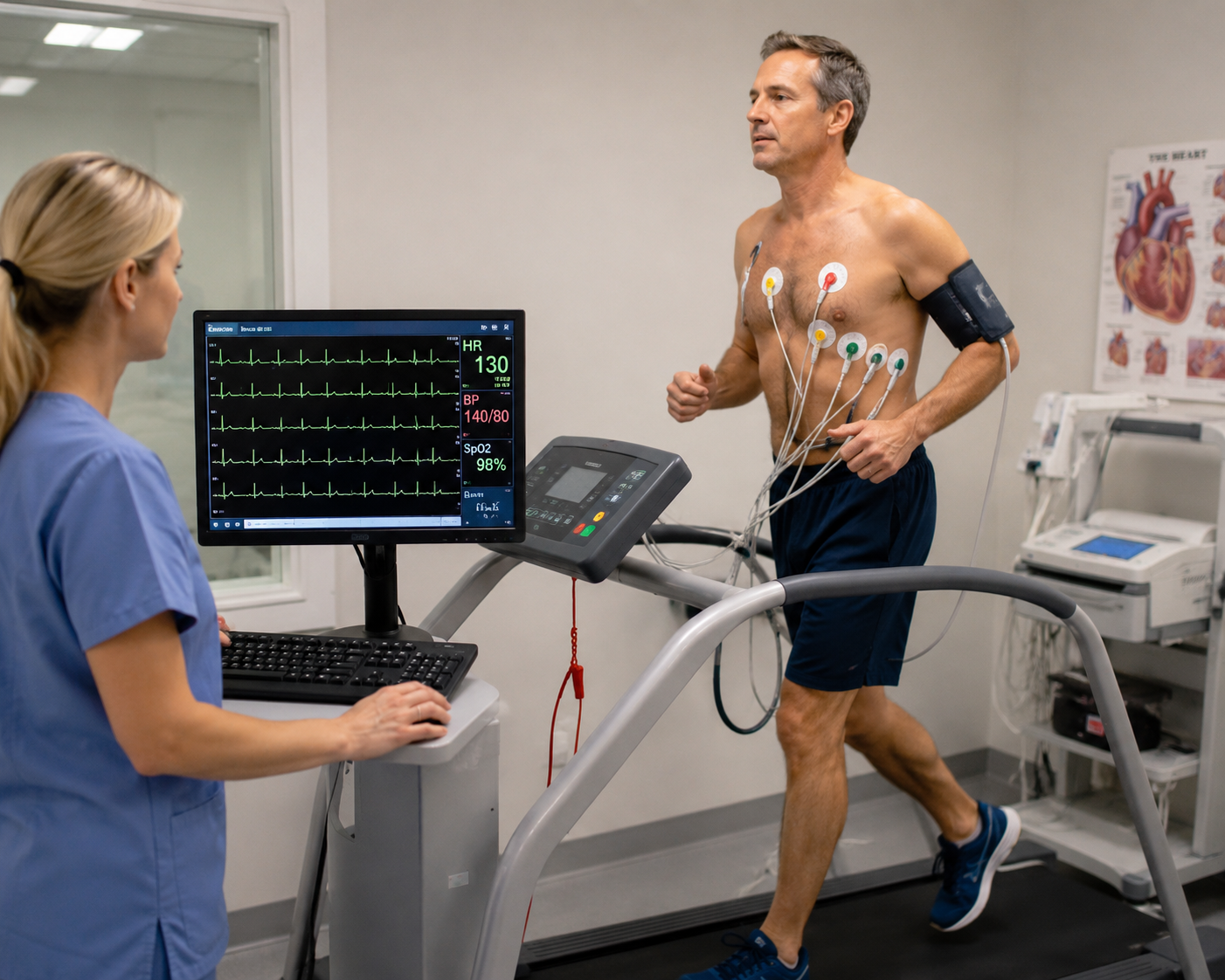
A stress ECG, also called a treadmill or exercise test, records your heart tracing, blood pressure and symptoms while you walk on a treadmill with the speed and slope increasing every few minutes. The idea is simple: a narrowed coronary artery may deliver enough blood when you are sitting still but not when your heart is working hard, and the strain on the heart muscle then shows up as changes on the ECG, as chest discomfort, or as an abnormal blood pressure response.
Why is it done?
It is used to investigate chest pain or breathlessness that may come from narrowed coronary arteries, to see how fit you are and how your heart rate and blood pressure respond to effort, to check whether exercise brings on palpitations or an abnormal rhythm and to guide safe exercise levels in cardiac rehabilitation.
How do I prepare?
Do not eat a heavy breakfast on the morning of the test. Wear comfortable clothes and proper walking shoes, and bring shorts or tracksuit pants if you like.
What happens on the day?
Sticky electrodes are placed on your chest, and a chest hair may need to be trimmed. A blood pressure cuff is put on your arm. A resting ECG and blood pressure are recorded and you then start walking on the treadmill at a gentle pace. Every few minutes the belt gets faster and steeper. A technologist stays with you throughout, watching the ECG continuously and taking your blood pressure at each stage. The aim is to reach a target heart rate, and the test is stopped if you develop chest pain, severe breathlessness, dizziness, exhaustion or an abnormal reading.
Possible complications
The test is safe when carried out under supervision, and your heart is monitored at every moment with resuscitation equipment on hand. You should expect to feel tired and out of breath, with a pounding heart and possibly some leg fatigue. Some patients have mild chest discomfort or dizziness, which settles with rest. Occasionally the blood pressure falls or an abnormal rhythm appears, and the test is then stopped. Serious events such as a heart attack or a life-threatening rhythm are very rare, roughly one in several thousand tests.
This information does not replace a consultation. Please discuss your own risks and options with your cardiologist.